
text and photos by Ricky Toledano
Heads in my numerous Pueblan family snapped in my direction when I asked them to go to the folkloric neighborhood of Xanenetla. They had obviously known something I didn’t. A few of the young’uns had heard of the murals painted on the walls of one of Puebla’s oldest quarters, but most warned me about going there. Among poblanos – natives of the colonial jewel of a city and UNESCO world heritage site – Xanenetla had a bad reputation. Few crossed the 5 de Mayo Boulevard in the direction of hilltop fort overlooking the city, for the promontory is skirted with an area that has been an outlier for some, say, 500 years. In fact, Xanenetla comes from the Nahautl word to describe a kind of volcanic gravel used for construction of the city’s great temples and churches, and, apparently, the descendants of the brickmakers have lived there ever since – together with a reputation that its recent residents had tired of.
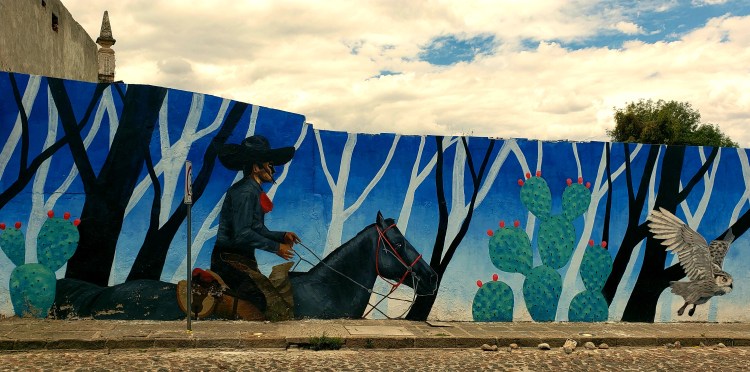
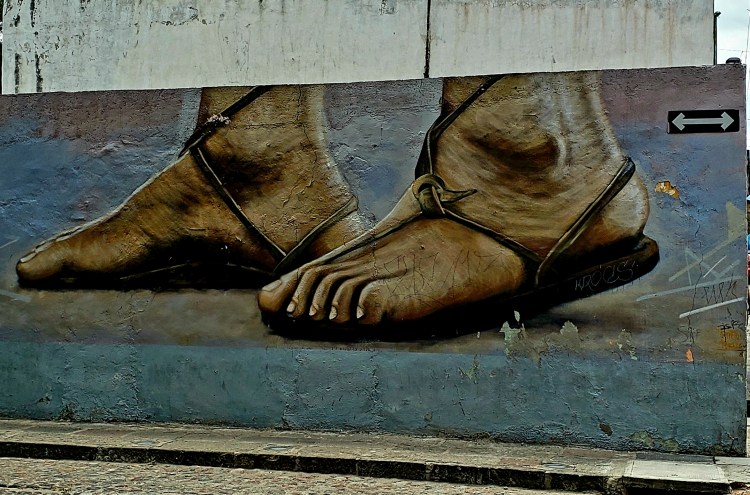
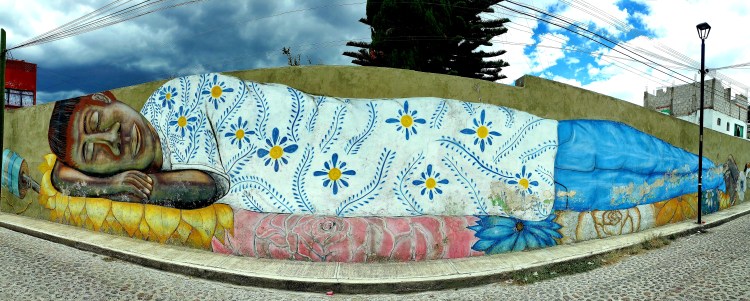
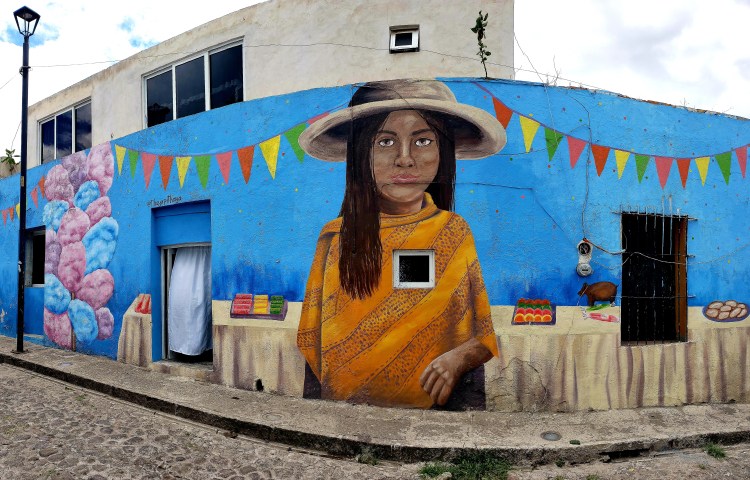
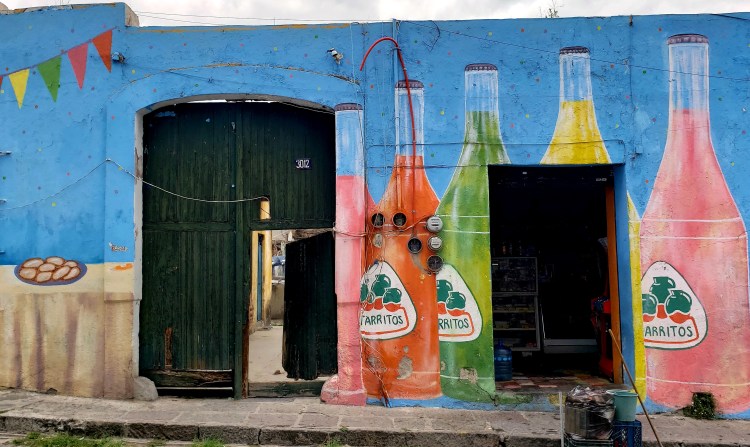
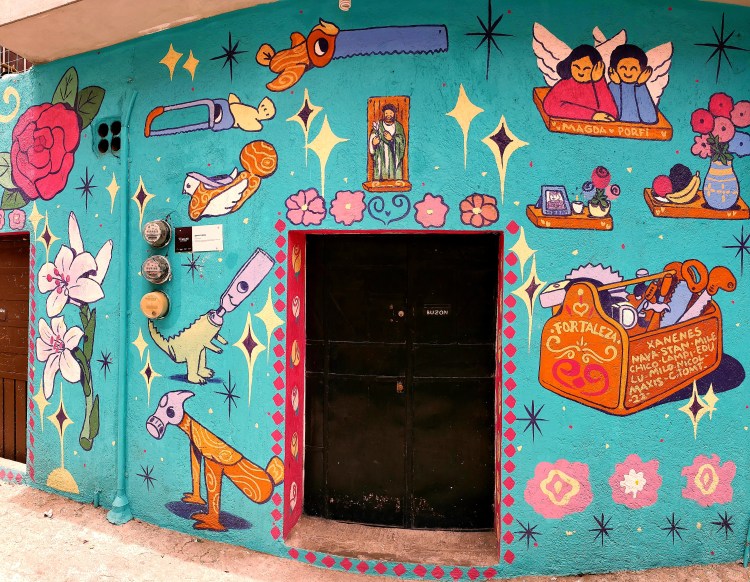
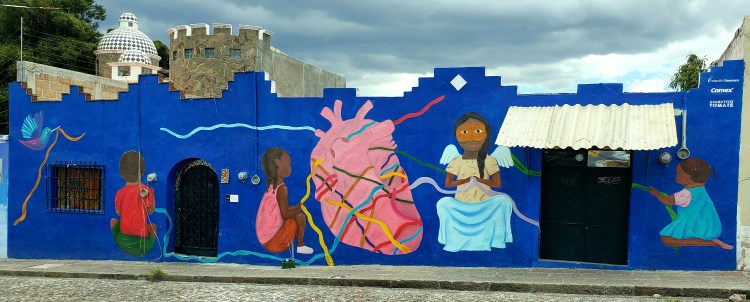
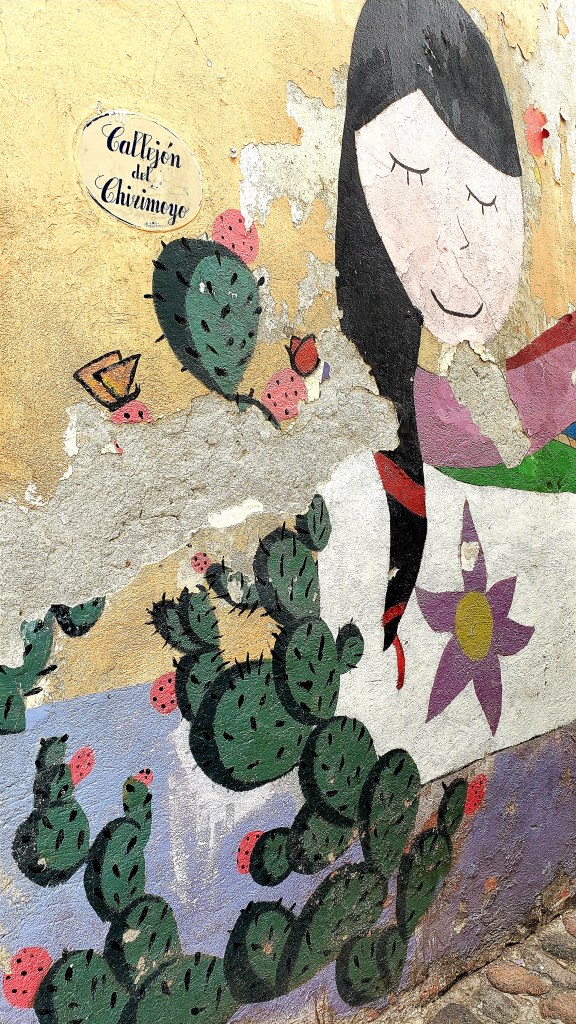
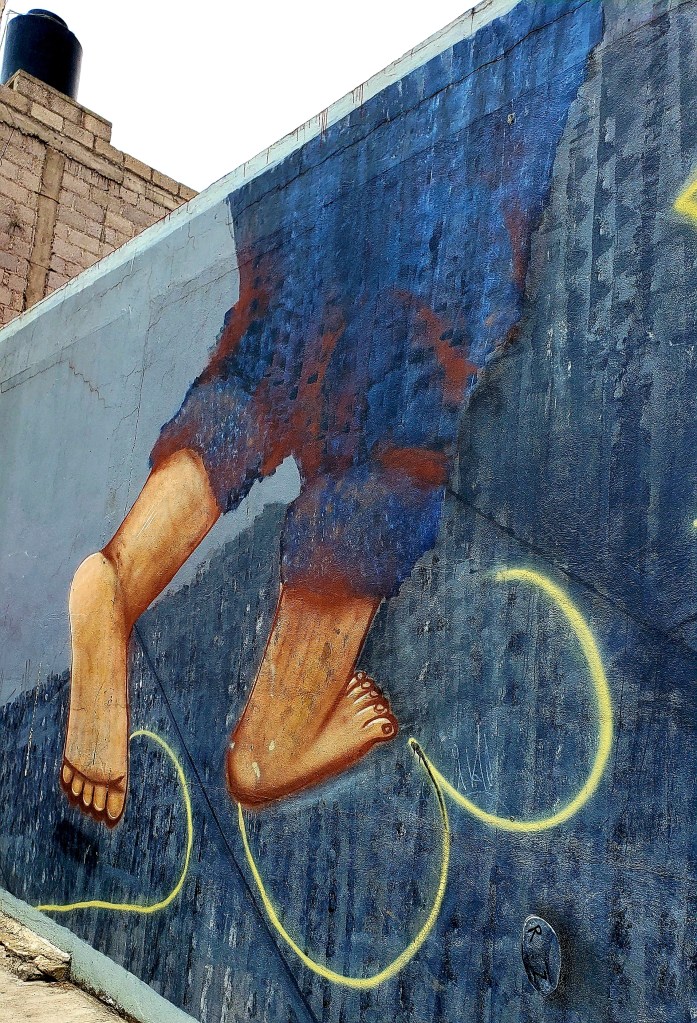
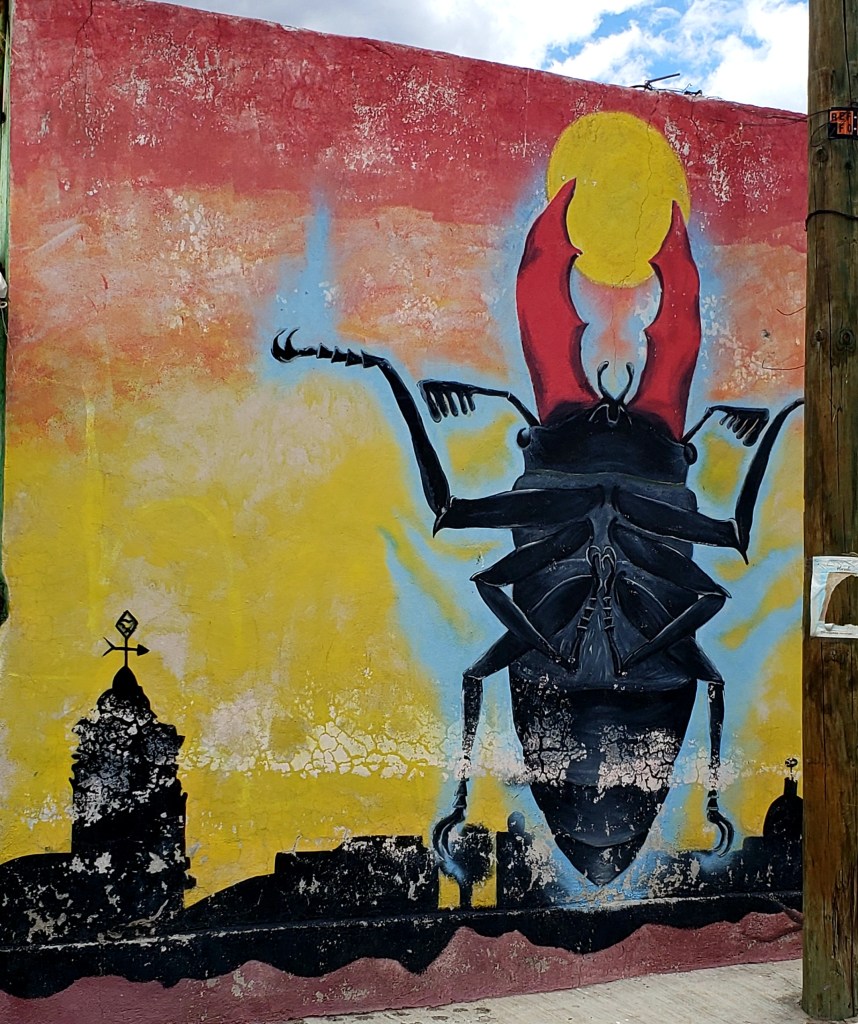
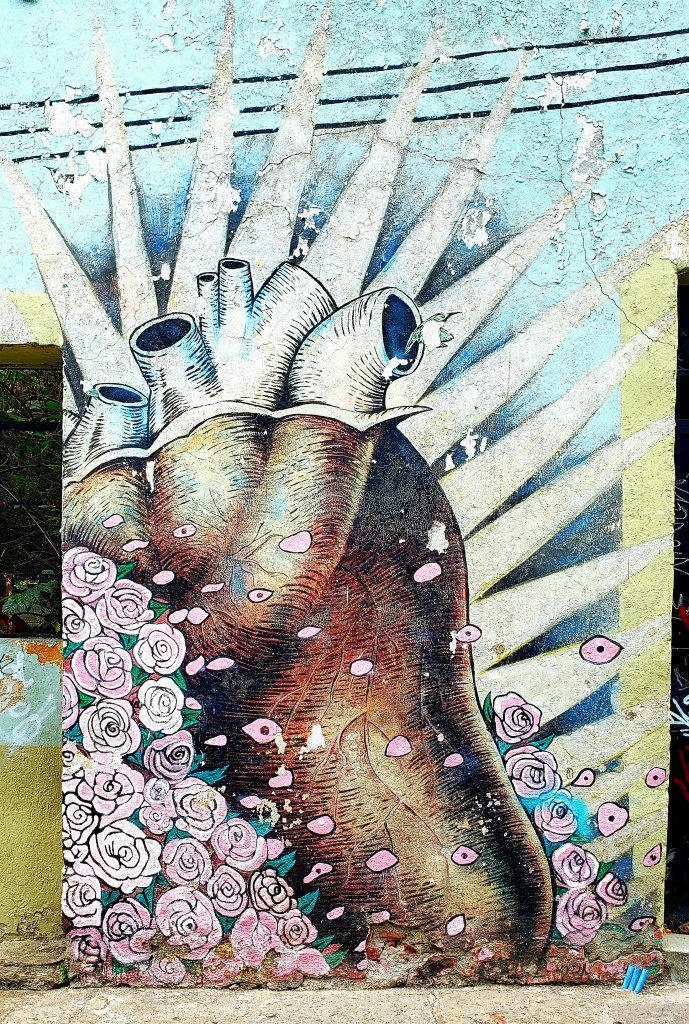
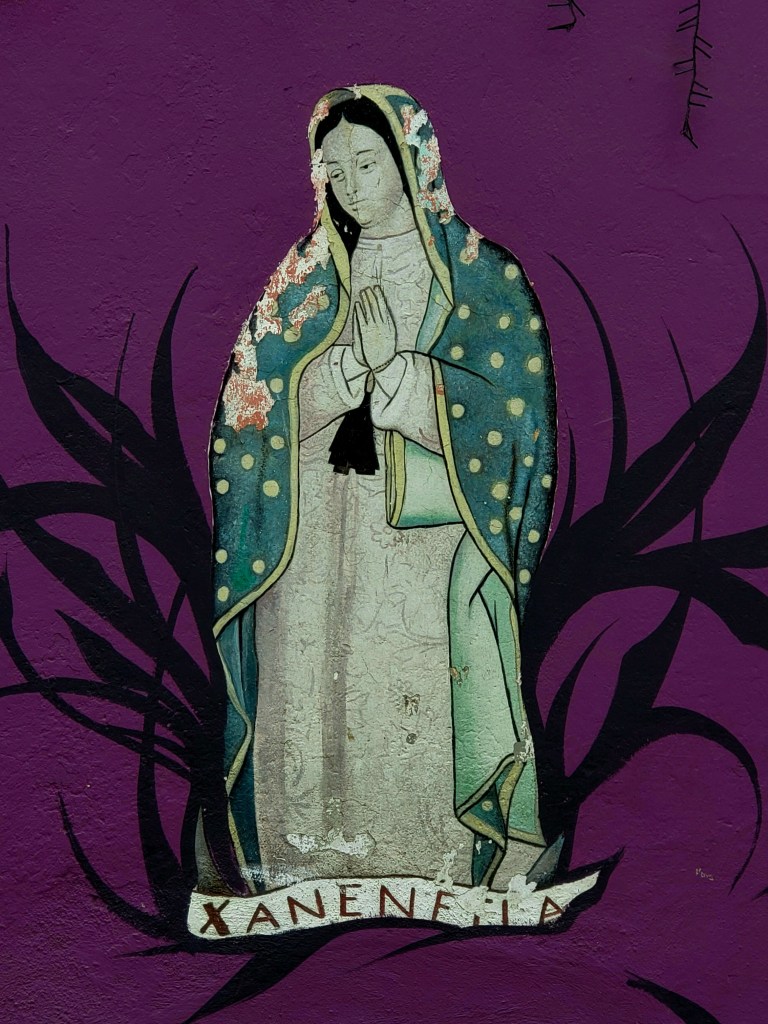
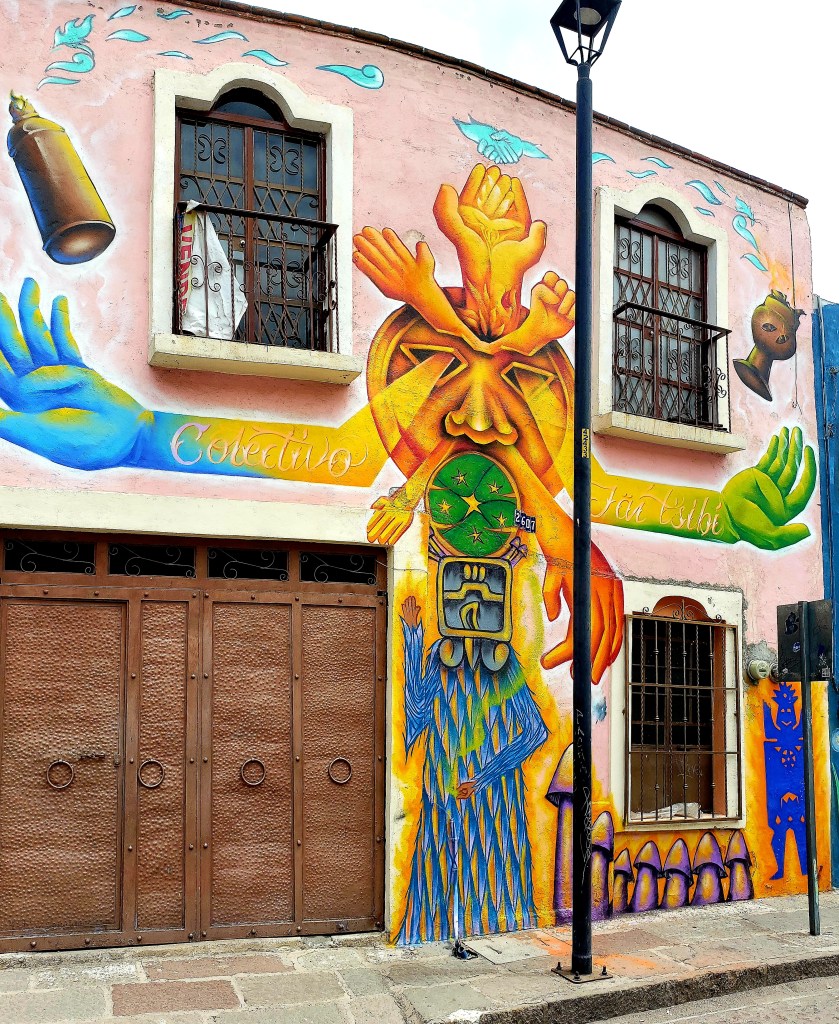
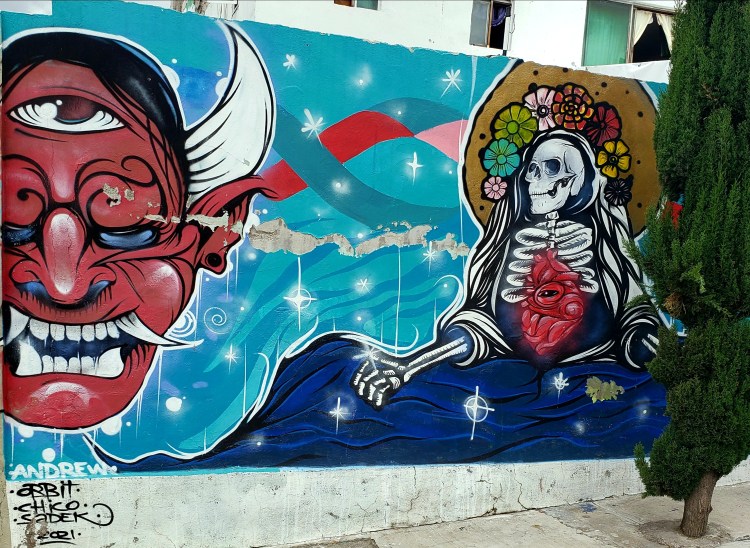
Colectivo Tomate was born to revert that reputation in Xanenetla. It has since expanded throughout Mexico as a social project to create connections between individuals and their communities through the nonviolent communication of art. Their initiative and murals have transformed Xanenetla. I was enchanted by what I had found. They were some of the most amazing murals I have found anywhere. Some were so large I tried to do them justice by photographing them panoramically.
What often happens with the city in which one inhabits is that novelty often gets overlooked in the daily routine. The quotidian passes unnoticed. The neighbors are unknown. Sharing space with people we don’t talk to makes it easy to estrange them, reaching conclusions about people and spaces we don’t even know. It is a cycle that can lead to disdain and violence. That is why I am always awestruck by the power of art to make that cycle spiral upwards, starting with a smile with a stranger on the street, mutually appreciating the beauty of a mural. Then you bring the children together, then their parents. The street becomes a public space where people are reintegrated into their surroundings. Others come to see the wonders – including my family, who now know more about their city, together with people from around the world. That is what happens when you plant the seeds of a tomato: they sprout and grow, hence the name of the Collective that has made a garden out of Xanenetla:
















 ā•multiplicity
Leave a comment