Around 1999, a friend invited me to a yoga class in my neighborhood in Santa Teresa, Rio de Janeiro. There was a famous teacher who had just returned from a renowned school in New York. I decided to go without really knowing why. I was young, strong, flexible, and in good health. I hadn’t felt any need to try something different. There was no particular calling—at least not that I was aware of. Later I would discover how we get summoned as part of a much bigger story we don’t author.
In the first class I was drenched in sweat. Lygia Lima had recognized a certain natural command of my body and then instructed me in coordinating movement with breath. She then organized them into flowing sequences that were repeated and repeated and repeated. I left the class feeling wonderful but also feeling bad: I didn’t have nearly the command of my body that I thought I had. My body felt broken for days, and I accepted the challenge. I marveled at how it was getting both easier and more difficult with each class.
Later, Lygia invited me to her class for a different kind of study. Her teacher was coming to explain Vedanta.
“What’s that?” I asked. Lygia replied that it was the traditional knowledge from which yoga came.
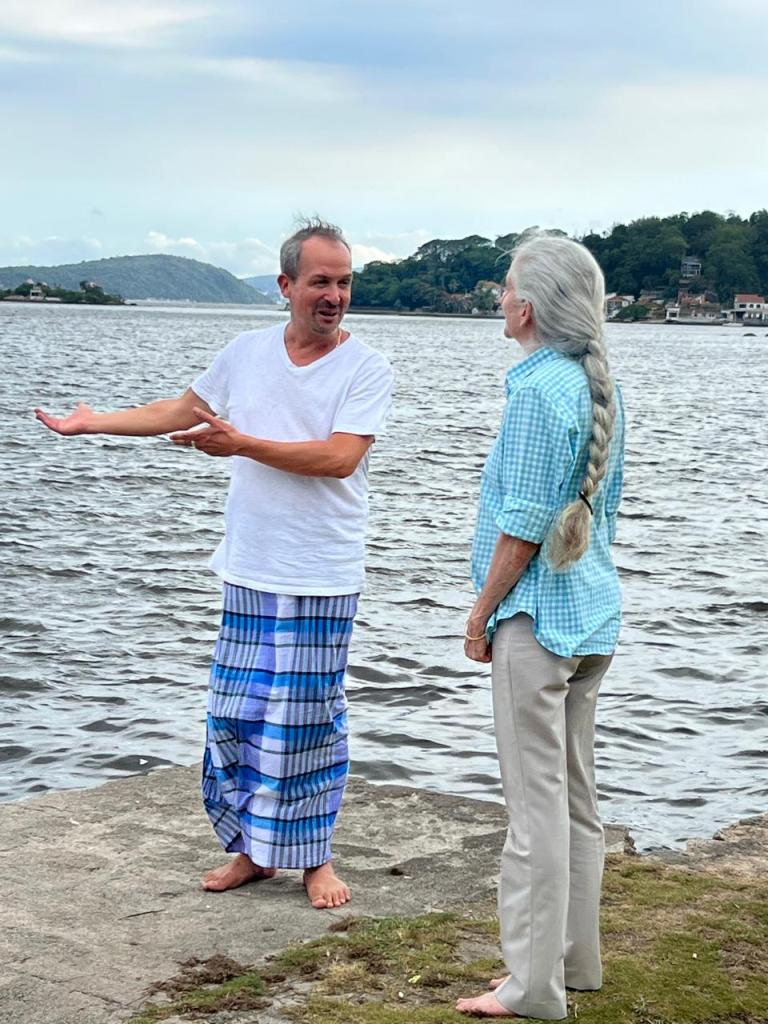
Her teacher had a long white braid and was sitting on the stage of the yoga studio, both telling and explaining a story. There were just three students: Lygia, me, and a nephew of the Vedanta teacher.
The story was about a heroic warrior who dropped his weapon in the middle of the battlefield. The great war was about to begin, and he—who had been prepared his entire life for that moment—no longer knew who he was, what he wanted, why he was there, what was right or wrong, and what he should do. But instead of having a complete breakdown, the warrior decided to ask these, the most simple and excellent questions a human being can ask. And that was when his teacher appeared. Because the warrior was ready to discover himself.
And there, in Lygia’s yoga studio, time stopped as the teacher appeared for me. I listened to the dialogue between that warrior and his charioteer—the one who led him. I wanted those questions answered. I wanted that knowledge. I needed that knowledge. I never looked back.
The woman with the long braid was, of course, Gloria Arieira, who most certainly experienced how time stopped when she first heard the words of the Bhagavadgita from her teachers, none other than Swami Chinmayananda and Swami Dayananda Saraswati.
I studied and studied with her. I practiced and practiced yoga and even began to teach. I took advantage of the English language to read outside of Vedanta class. Reading the plethora of materials available from all sorts of teachers and translators of the ancient texts, I began to notice something: Gloria’s translations of Sanskrit into Portuguese were sharper, clearer. The Latinate language and the way she used it left less margin for error, for ambiguity. It resonated.
Years later, I had never dreamed that I would publish her Bhagavadgita and Yoga Sutra in English. In much the same way, I imagine, Gloria Arieira had never imagined that she would go to India to live and study Vedanta in the 1970s.
If her family had ever thought she was crazy to do so, they certainly do not think so now: In 2020, Gloria Arieira was awarded one of the highest civilian honors of the Republic of India—the Padma Shri—for her life’s work bringing the Vedic Tradition to Brazil and the Portuguese language.
On behalf of all of her students, I say that she didn’t need a Padma Shri to have our love, recognition, and gratitude, but you cannot imagine our joy when the announcement was made!
That was when another coincidence—that is not a coincidence—happened. Dheeraj Dhari called me from India on Republic Day, 2020:
“Bhai, there is a Brazilian woman on the national news. She was just awarded the Padma Shri: Isn’t that your teacher? I think it is…”
He sent me the screenshot. I almost keeled over.
I think I might have been the first in Brazil to receive the news, maybe even before Gloria. I am certainly one of the few people in Brazil who understands the significance of a Padma Shri, because, well, let’s just say that I also have a long story with India now.
That first encounter with Lygia and Gloria sent me in directions I’d never imagined. I too went to India. I wanted to meet Gloria’s teacher, Swami Dayananda Saraswati—and I did—but I soon realized that my charioteer had a different plan for me as I got, well, deviated.
The knowledge of the Self as described in the Vedas is that jiva, jagat, and Isvara (the individual, the world, and the cause and form of all that there is) are one and the same. I thought I would be getting more explanation on this in an ashram in Rishikesh—and I did—but I soon realized that I needed no further explanation than Gloria’s. It wasn’t going to be in an ashram that I would put this knowledge into practice.
The test was in a very special place in this world called Chandni Chowk—if you are Indian, especially from Delhi—you are probably already on the floor rolling in laughter.
Living with the typical Indian joint family in the most folkloric neighborhood in the entire Republic of India, I had to learn to navigate many, many things in the mayhem both inside me, in the house, and outside in the streets of Delhi 6—the battlefield where I would discover who I was, what I wanted, why I was there, what was right and wrong, and what I would do.
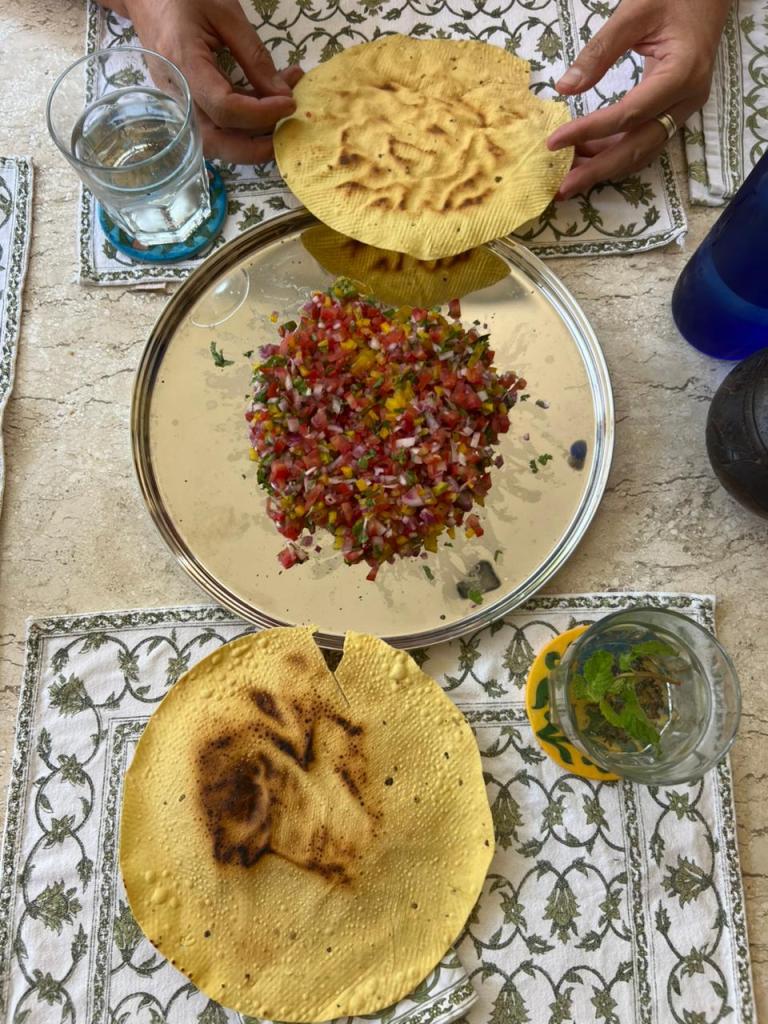
It was difficult, but it was the greatest school of my life. It will be a book someday. And I am forever grateful to the Dhari family for taking me in to discover a new world and myself. Out of great love I return to them year after year—so many times I have lost track already—but I must also confess that it is out of a great love for… food.
I don’t know if I will leave this world successful on the path to self-knowledge that is yoga and Vedanta, but I am certainly going with a knowledge of food I acquired in India—a knowledge just as inseparable from the culture.
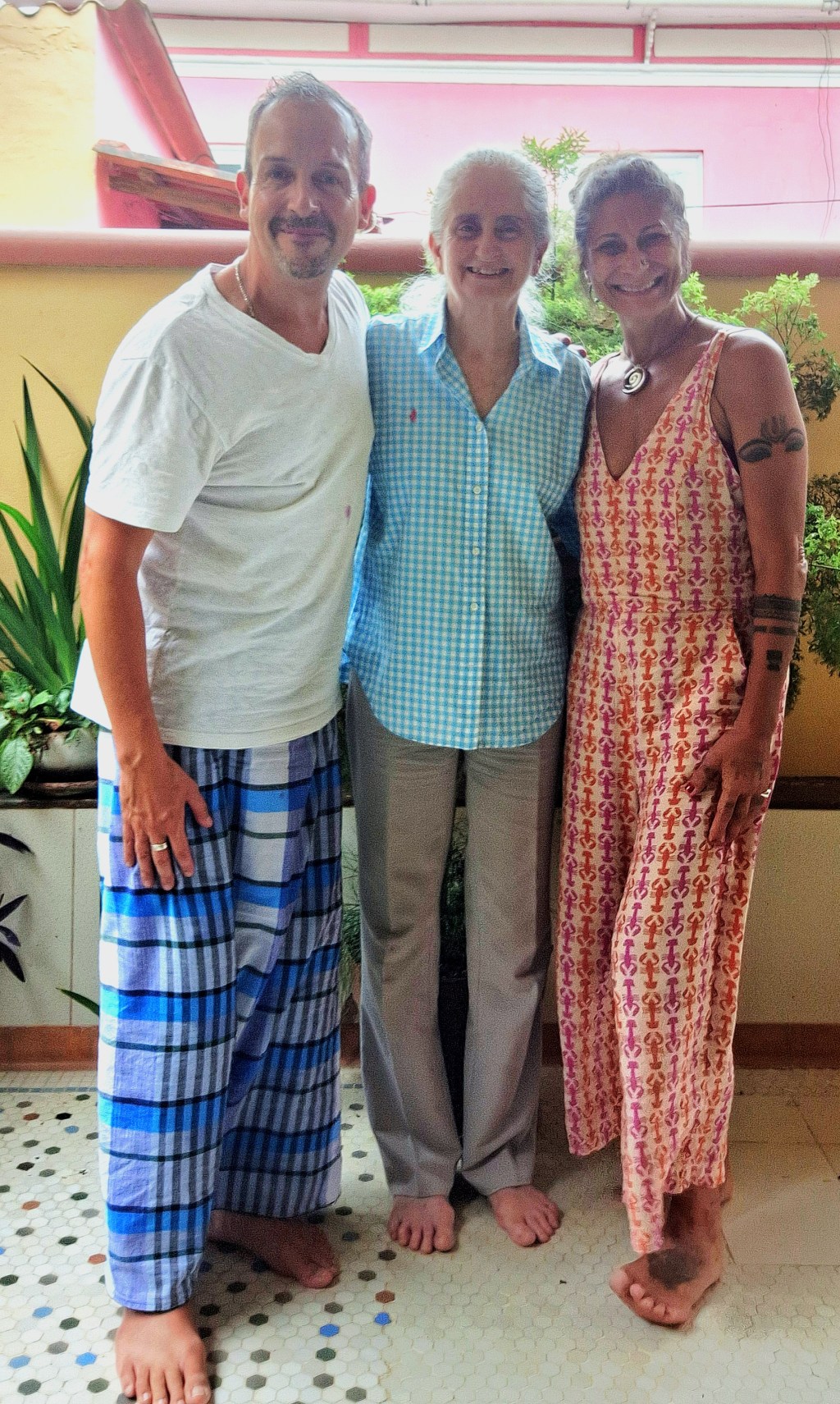
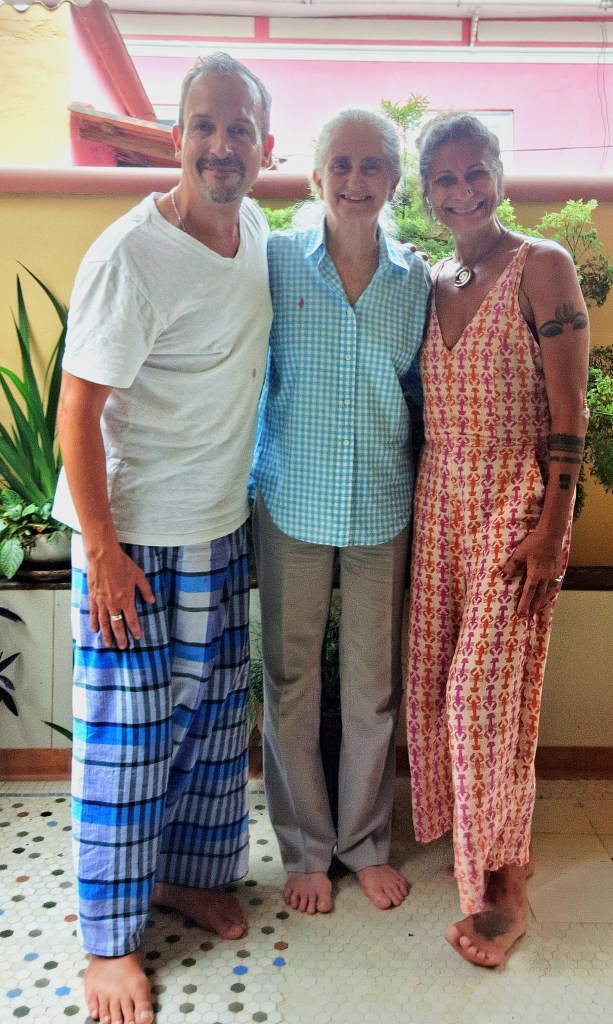
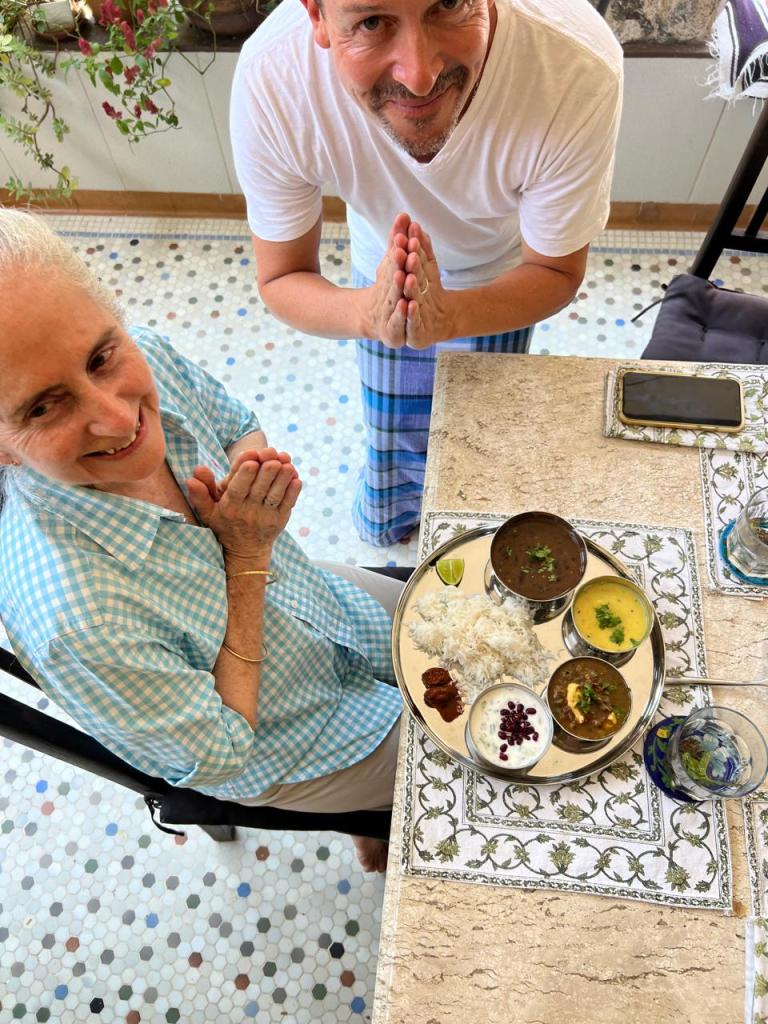
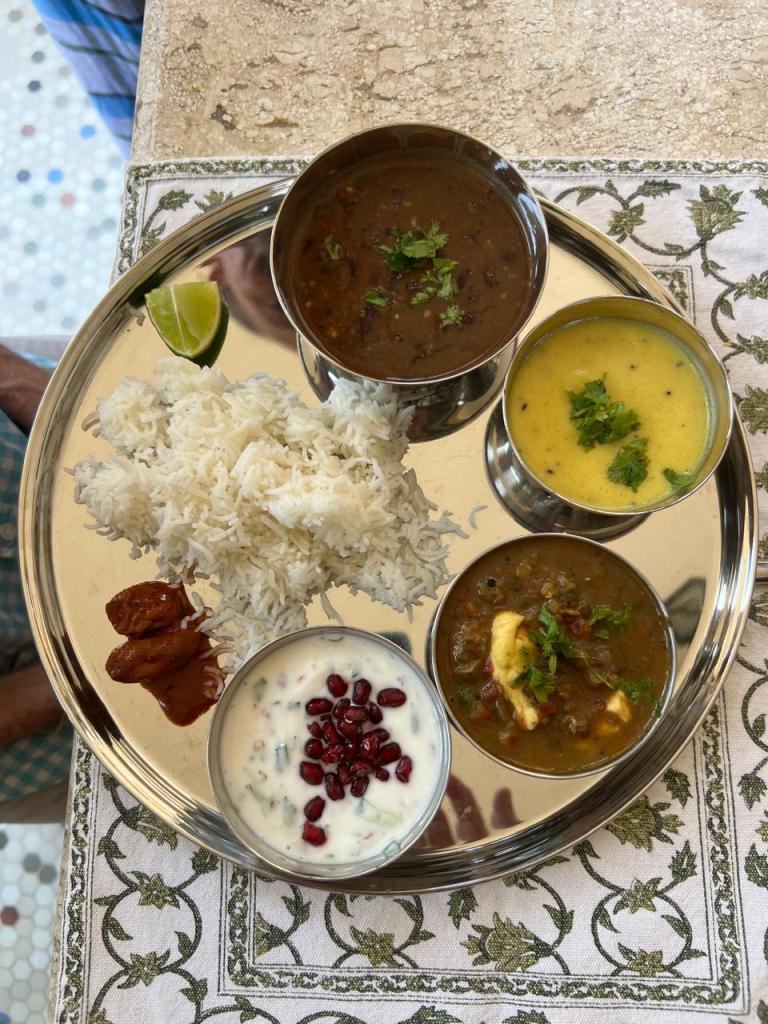
That is why, when Gloria Arieira finally came to my home for the first time, I went at her not only with the rajma chawal (red beans and rice) of Chandni Chowk but with all that I had learned there. All my power! Indians can appreciate the great honor, the great joy it is to receive in one’s home, Atithi Devo Bhava—the guest is God—but imagine when it is one’s teacher!
Less than a week after arriving from India and after the distance of years, I can see how Lygia and Gloria converged on my path that could have been no other. All the encounters in life have a purpose. There was no such thing as coincidence. That is just part of what Sri Krsna explains to Arjuna, the warrior overwhelmed on the battlefield by the choices that aren’t really choices. They are part of a plan.

 ā•multiplicity
Leave a comment